Summary
A good dsa roadmap moves in order. Start with the basics and arrays, then simple sorting and searching, then recursion. After that learn stacks, queues, and linked lists, then trees and graphs, and save dynamic programming for last. Skipping ahead is the most common reason people give up.
Most students fail at data structures and algorithms for one reason. They learn topics in the wrong order. They jump to dynamic programming in week one, get crushed, and quit.
The order matters more than the effort. So here is a roadmap that builds each idea on the one before it. Follow it and the hard topics stop feeling impossible, because you reach them ready.
Why the order matters
Each topic in DSA leans on an earlier one. Sorting needs arrays. Trees need recursion. Graphs reuse the stack. Dynamic programming sits on top of recursion. Learn them out of order and every new topic feels like it has missing pieces, because it does.
This roadmap has six stages. A motivated student can move through it in about three to four months with steady daily practice. That is a real number, not a promise. Some stages click in days, others take weeks, and that is normal. The goal is understanding, not speed.
Stage 1: The basics and arrays
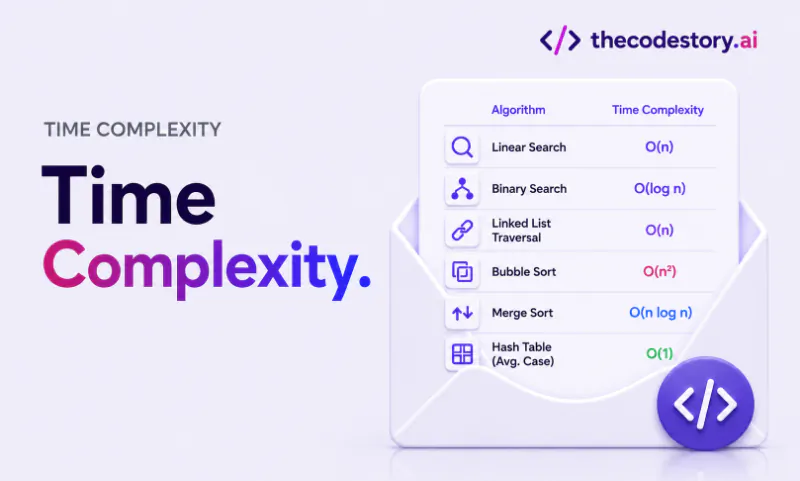
Start by learning what DSA even means and why it matters. Get clear on the idea of time complexity and Big O, at least enough to know what O(n) means. Our guide on what DSA is covers this ground.
Then spend real time on arrays. They are the most basic structure and almost everything else builds on them. Most students rush this stage. Do not. A week here saves a month later.
Stage 2: Sorting and searching
Now use those arrays. Sorting and searching are the first real algorithms, and they teach you how to reason about steps and speed. Start with the simple sorts before the clever ones.
Learn selection sort and bubble sort first, because they are easy to picture. Then move to quick sort, which is faster and harder. For searching, start with linear search, then binary search. By the end of this stage, Big O will feel real instead of abstract.
Stage 3: Recursion
This stage is the hinge of the whole roadmap. Recursion is a function calling itself, and it unlocks trees, graphs, and dynamic programming later. If recursion feels shaky, every later topic will too.
So slow down here. Practice until you can trace a recursive call by hand and predict its output. This is the one stage where extra time always pays off. Many students who struggle with trees are really still struggling with recursion.
Stage 4: Linear structures
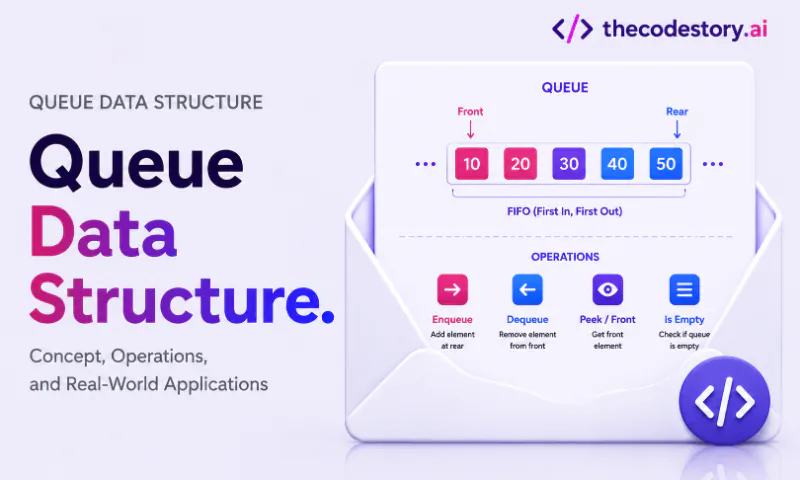
With recursion in hand, learn the structures that store data in a line. The stack comes first, because it connects straight back to recursion through the call stack. Then learn queues, which are the first in first out cousin of the stack.
Linked lists belong here too. They teach you how data can live in scattered memory joined by pointers, which is a big step up from the neat rows of an array. These structures are common interview ground, so do not skip them.
Stage 5: Trees and graphs
Now things get powerful. Trees store data in a branching shape, and binary search trees give fast lookups. Because trees are recursive by nature, this is where your Stage 3 work pays off.
Then learn the graph data structure, which models any set of connections, like maps or social networks. Learn how to store a graph, then how to walk it with breadth first search and depth first search. This stage is where you start solving problems that feel genuinely real.
Stage 6: Dynamic programming
Save this for last. Dynamic programming is where most beginners crash when they start too early, but it feels almost fair once recursion is solid. The whole idea is to solve small problems once and store the answers, so you never repeat work.
Start with classic problems like the knapsack problem, which shows the table filling in step by step. You can also fold in backtracking here, with the n queens problem as a clear example. Reach this stage in order and it will feel hard but doable, not impossible.
The trap most roadmaps ignore
Grinding hundreds of problems before you understand patterns is wasted effort. People do 300 problems, then freeze on problem 301 because it is a little different. Learn the pattern behind each topic first, then practice enough to make it stick. Twenty problems you truly understand beat 200 you only copied. Depth wins over volume every time.
FAQ
How long does it take to learn DSA?
With steady daily practice, about three to four months to get comfortable for interviews. It depends on your starting point and how much you practice, so treat that as a guide, not a rule.
What should I learn first in DSA?
Start with the basics of time complexity and arrays. Arrays are the foundation that sorting, searching, and most other structures build on, so a strong start there pays off later.
Do I need to know a language before starting DSA?
Yes, learn the basics of one language first. Python is friendly for beginners, while C++ is common in Indian placement tests. You only need loops, functions, and arrays to begin.
Why is recursion so important in the roadmap?
Because trees, graphs, and dynamic programming all build on it. If recursion is weak, those later topics feel impossible. It is the single most important stage to get right.
Should I learn dynamic programming early?
No. It is the most common reason beginners quit. Learn it last, after recursion is solid, and it will feel hard but fair instead of crushing.
Is it better to do many problems or understand patterns?
Understand patterns first. A small set of problems you fully grasp beats hundreds you copied. Practice is for making a pattern stick, not for replacing understanding.
So what should you remember?
DSA is not as hard as it looks. It is hard when you learn it in the wrong order. Follow the six stages, give recursion the time it deserves, and leave dynamic programming for last.
Understand each pattern before you drill it, and you will reach the advanced topics ready instead of overwhelmed. The roadmap does the heavy lifting if you trust the order.
So which stage are you on right now, and what is the one topic you have been avoiding?