Summary
DSA stands for data structures and algorithms. A data structure is a way to store and organize data, like an array or a list. An algorithm is a step-by-step method to solve a problem, like sorting or searching. Together they teach you to write code that is fast and uses memory well.
Every Indian student hears the same three letters before placements. DSA. Seniors stress about it. Companies test it. And almost nobody stops to explain what it actually means.
Let me clear it up. DSA is not one scary subject. It is two simple ideas that work together, and you already use them every time you write code.
What is DSA?
So what is DSA? It stands for data structures and algorithms. Those are the two building blocks of all problem solving in code. One is about where you keep your data. The other is about what you do with it.
Think of cooking. A data structure is your kitchen setup, the shelves and jars where you store ingredients. An algorithm is the recipe, the steps you follow to turn those ingredients into a meal. You need both. Good ingredients with no recipe gets you nowhere, and a great recipe with a messy kitchen slows you down.
DSA is just the study of picking the right storage and the right steps. Master that and your code runs faster, uses less memory, and handles big inputs without crawling.
What is a data structure?
A data structure is a way to store and organize data so you can use it well. Different structures are good at different jobs. The trick is matching the structure to the task.
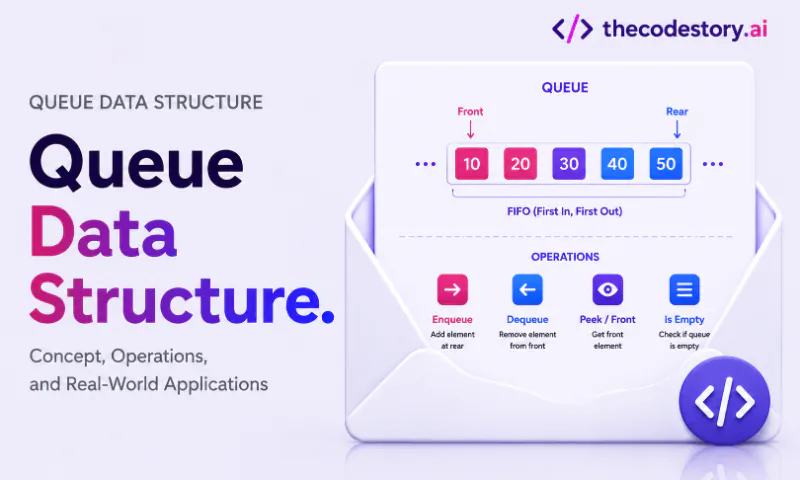
Here are the ones you will meet first. An array holds items in a row, one after another. A linked list chains items together with pointers. A stack lets you add and remove only from the top, like a pile of plates. A queue works like a line at a counter, first in and first out. Later you reach trees and graphs, which store data that branches and connects.
Each one trades something. An array is fast to read but slow to grow. A linked list grows easily but is slower to search. Knowing these trade-offs is half of what DSA teaches you.
What is an algorithm?
An algorithm is a step-by-step method to solve a problem. It takes some input, follows a clear set of steps, and produces an answer. A recipe is an algorithm. So are the directions your map app gives you.
In code, the classic examples are sorting and searching. Sorting puts a list in order, and there are many ways to do it. Some are slow and simple like selection sort. Some are fast and clever like quick sort. Searching finds one item in a pile of data, and a smart search like binary search can check a million items in about twenty steps.
Many algorithms also call themselves on smaller pieces of the problem. That idea is called recursion, and it powers a lot of the fast algorithms. If it feels strange at first, our guide on how recursion works walks through it step by step.
Why does DSA matter for placements?
DSA matters because it is the gate to most tech jobs in India. Product companies like Google, Amazon, Microsoft, Flipkart and Zomato build their first interview rounds almost entirely around it. Clear those rounds and you are in. Fail them and you never reach the rest.
There is a deeper reason too. Interviewers do not really care if you remember a sorting algorithm by heart. They want to see how you think. DSA problems show whether you can break a hard task into smaller steps, spot a pattern, and reason about speed and memory. That skill is what the job actually needs. You can read more about why companies lean on it on this overview of data structures.
How much DSA do you actually need?
Here is an honest take that most guides will not give you. You do not need to solve 500 problems to clear placements. That number scares people into quitting before they start.
What you really need is a solid grip on about a dozen core topics. Arrays, strings, linked lists, stacks, queues, hashing, trees, graphs, sorting, searching, recursion and dynamic programming. Learn how each one works, then practice enough problems to recognise the patterns behind them. Depth beats volume every time.
The students who grind hundreds of problems without understanding them often freeze in the interview, because a small twist breaks their memorised answer. The students who understand the why stay calm, because they can rebuild the solution on the spot. Aim to be the second kind.
How to start learning DSA
Start small and build up in order. Jumping straight to graphs and dynamic programming is the fastest way to feel lost. A clear path keeps you moving.
Begin with arrays and strings, since almost everything else builds on them. Next learn the simple structures, stacks and queues. Then take on sorting, where watching the steps run makes the logic click. Selection sort is the gentlest start, and quick sort shows you the faster ideas. After that, learn recursion, because trees, graphs and dynamic programming all lean on it.
One habit matters more than any topic order. Trace the code by hand. Walk through what each line does to your data, one step at a time. That is the single fastest way to truly get an algorithm, and it is exactly how CodeStory teaches every topic.
FAQ
What does DSA stand for?
Data structures and algorithms. Data structures are ways to store data. Algorithms are step-by-step methods to process it. Together they are the core of coding interviews and efficient programming.
Is DSA hard to learn?
It feels hard only because most material explains it poorly. Taken one topic at a time, with the code traced step by step, it is very learnable. Beginners pick it up every day.
Which language is best for DSA?
C++ and Java are the most common for Indian placements, because they run fast and most courses use them. Python is the easiest to read while learning. Pick one and stick with it.
How long does it take to learn DSA?
With steady daily practice, most beginners build a solid base in three to six months. The timeline depends on your starting point and how consistently you study, not on raw talent.
Do I need DSA if I use AI coding tools?
Yes. Companies still test DSA in interviews, because they want to see how you think, not just what you can copy. AI tools help you write code faster, but they do not pass the interview for you.
Where should a complete beginner start?
Start with arrays, then simple sorting like selection sort, then recursion. Learn how each one works by tracing it by hand before moving on. Order and understanding matter more than speed.
So where does this leave you?
DSA is just two ideas. Smart ways to store data, and clear steps to use it. Everything else is built from those two parts, one topic at a time.
You do not need to be a genius and you do not need 500 problems. You need a plan, a bit of patience, and the habit of watching code run until it makes sense.
So which topic will you start with this week, sorting or recursion?